Tuesday at Animafest 2026
Inclusive World Premiere – Best Students – Animation Histories

Kurvin sin / Son of a Bitch (Erica Maradona, Otto Guerra, Sávio Leite, Tania Anaya)
Day two at Animafest Zagreb 2026 will dawn with the youngest visitors who will be watching the Films for Children Competition 2 (7-10 years old) at Kinoteka from 9:30 am, and among the numerous excellent and age-appropriate titles (e.g. Cloud Fish, dir. Noé Garcia; Battery Grandma, dir. Seungbae Jeon; The Eagle and the Kinglet, dir. Paul Jadoul), In a Faraway Forest: The Apple of Discord stands out in particular – a dynamic, beautifully drawn and fluidly animated, and especially humorous Slovenian-Croatian adaptation of the story about a hedgehog, a squirrel, and the titular fruit that brings them into conflict. Author Timon Leder will personally present the film. At 11:30 am, the Films for Children Competition 3 (11-14) will follow, with guests Lea Vučko (The Girl Who Wasn’t Afraid of Bears), Mikael Jacobsen (City in the Fox), Gertrūda Nemčauskaitė (Backstreet Birds) and Elise Kerob (Pocket Full of Pebbles). At 2:00 pm, the Films for Youth (15+) will present their works in person: Xie Chia-Ping (Before You Gone), Masataka Kihara (Q), Francisco Visceral Rivera (The Scarlet Tamagochi), Antonie Zavadilová (The Autoharp Crushing on Hot Guys) and Mingyu Wang (On the Other Side…). The Films for Children Competition 1 (3-6 years) program can be seen today at NS Sesvete at 10:00 am.
The afternoon at Kinoteka is dedicated to slightly more mature viewers, who will first be interested in the second segment of Focus on Slovenia titled The Historical Jump, in which we watch the ground-breaking, first Slovenian feature-length animated film Socializing the Bull? by Zvonko Čoh and Milan Erič, as well as Čoh’s second film Kiss Me Gentle Rubber. The opening speech will be given by Igor Prassel, a curator from the Slovenian Cinematheque.
At 6 pm, the Grand Competition Short Film 5 at Kinoteka brings: Winter in March by Natalia Mirzoyan – a documentary puppez-film about the escape of a young couple from Russia after the start of the war in Ukraine; Tourists by Márija Kralovič – ironic and sympathetic incidents and mishaps of a voluptuous amateur girl scout as a metaphor for awakening passion in a stale relationship and breaking free from a toxic relationship; Bread Will Walk by Alex Boya – a satirical zombie-apocalypse that comments on GMO food, marketing and other ‘beauties’ of capitalism; Loneliness, Snow, and Pines by Vladislav Ivanov and Ivaylo Zahariev – a film adaptation of Bulgakov’s story centred around a dramatic telephone conversation; Carmen Córdoba González’s Spanish ironic caricature on a serious subject, Pinchu Is Like That – about the protagonist’s unpleasant experience with a pervert who is pandered to by her social circle; Jocelyn Charles’s God Is Shy – perhaps the most colourful horror film ever made outside of Japan, in which this debut director brings to life the fears of two young people about train travel, drawing on Ari Aster, Jordan Peele, E. A. Poe and H. P. Lovecraft.
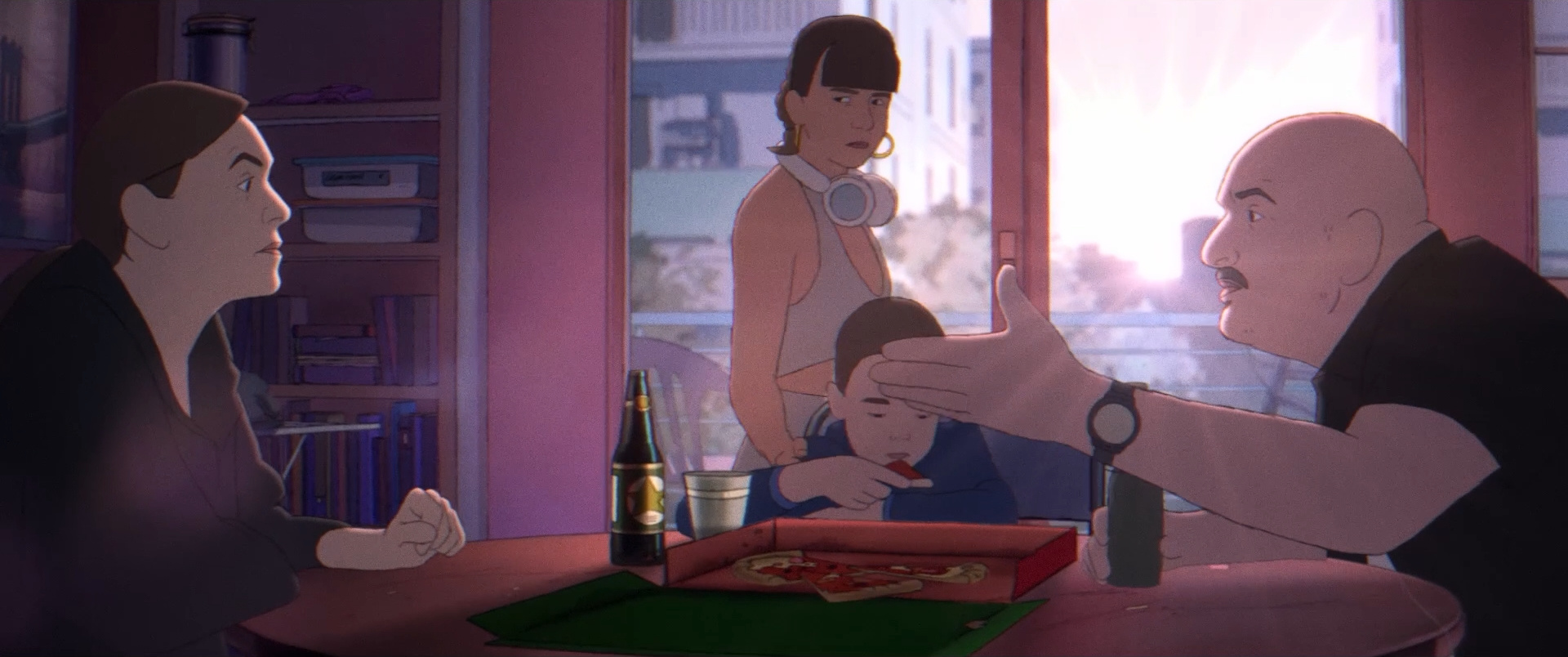
Tuesday at Kinoteka ends at 8 pm with the world premiere of the hilarious Brazilian comedy drama Son of a Bitch (dir. Erica Maradona, Otto Guerra, Sávio Leite, Tania Anaya) – an inclusive screening (equipped with inclusive subtitles and a recording of the translation into Croatian sign language and audio description) of the search for family and personal identity, executed in a combination of road movie, western, magical realism, parody of Moby Dick, biblical allegories, musical and strong comic presence. After the premiere, director Sávio Leite and animator Matheus Neilor will talk about the film.
The film program at the SC Cinema from 1 pm to 6 pm is dedicated to the best student animation. At 1 pm, in the Student Film Competition 3, you can see: an unusual darkly humorous melodrama and a parable about the face and back of love We Will Meet Again (dir. Yuseon Park); an engaging film about homelessness with striking chiaroscuro technique and striking juxtapositions, The Places We Call Home (dir. Meike van Son); an erotic anti-war gay drama set in the Israeli-Palestinian conflict, Fucking War (dir. Ohad Manor); a technically complex and psychologically layered youth rave work, Acid Echo (dir. Elsa Moulin); an Irish black-and-white ‘farmer’ drama about the relationship between mother and daughter, There’s Something in the Milk (dir. Cliona Noonan); an artistically impressive and ecologically engaged Taiwanese film, Falling Mist (dir. Yu-jin Zhuang); a 3D SF by a group of French authors Kamarade about the relationship between man and robot; an unusual allegory about coming of age in a Moebius-Renaissance, surrealist alternative history world, Firstborn (dir. Olivia Porrill); an intriguing blend of colourful cheerfulness and morbidity Hungry Hollow (dir. Sarah Ruyle) and Arachnophobia, a claymation cringe grotesque by Croatian author Melita Sandrin, produced in Slovenia.
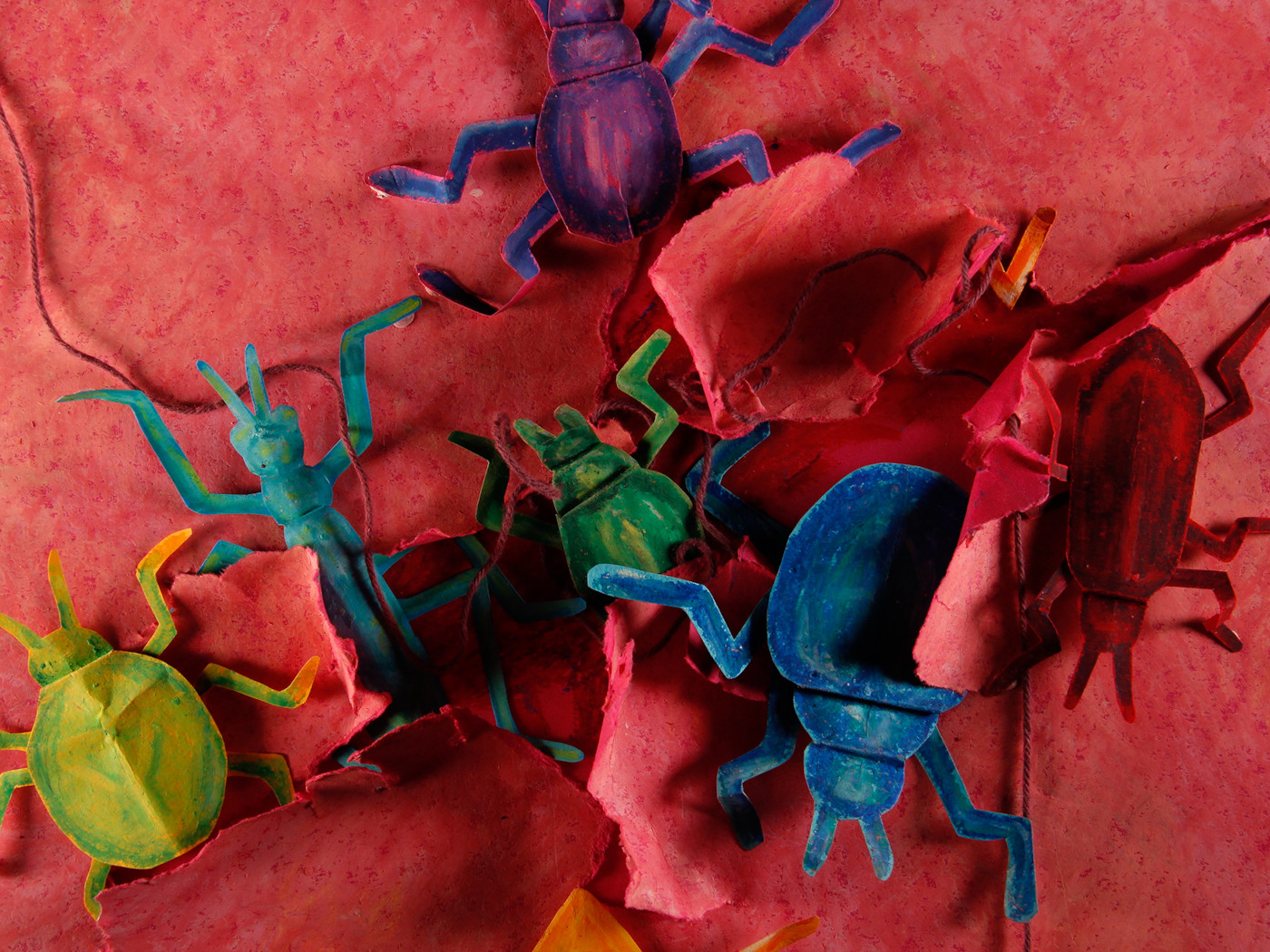
At 3:30 pm, the Student Film Competition 4 will screen: the world premiere of Prometheus 2025 (dir. Seungmin Han), a film partly painted on glass and partly AI that reflects on the Promethean status of the technology it uses through a mythological story; So He Grabbed the Knife (dir. Sam Kuwa) – using sand animation, glass painting, drawing and rotoscoping to depict the events that influence a young man’s violent act; a satire of American trash television also driven by different techniques and the character of a satanic host, TV Entreaberta (dir. Mateus Compart); reminiscene on a holiday evening with the father On Saint Nicholas’ Eve (dir. Emy-Mirel Ivașcă) that hides a dark subtext of devastating alcoholism; a visually spectacular The Rossini Garden by a group of authors that takes us on a journey through the imaginary surrealist world of an eccentric horticulturist; the avant-garde-inspired, sensual The Eating of an Orange (dir. May Kindred-Boothby) about the ‘realm of the senses’ within the walls of a dehumanised convent; the bizarre-witty free jazz etude Insecticide (dir. Paula Gallego González) that comments on the perniciousness of ‘screen pornography’; the moving autobiographical story of an imprisoned opponent of the Russian regime Things That I Was Gathering by Ekaterina Zhuzhleva; the German watercolour Sensual (dir. Tanja Nuijten) in which animals caress their bodies in a peculiar metaphor of closeness and tenderness; the dance Polish 3D How Things Are Between Us (dir. Julian Czurko) in which the choreography of the crystallised world of two figures leads one towards the other.
At 5:30 pm, the Student Film Competition 1 will be accompanied by a conversation with the authors. Natálie Durchánková (To Bloom Again) and Yeonwoo Kim (Fingerbang) will present their truly extraordinary films to the world for the first time – the first is a brilliantly directed and edited film, balanced in symbolism and drawing, and convincing in characterisation, about the psychological state of a woman after a miscarriage, and the second is a powerful psychologically layered surrealist-fetishist story about an alienated girl’s erotic fixation on fingers and touches. Maria Zilli will talk about her grotesque Visiting the Zoo about animal urges accompanied by the rhythms of the art-rock band Moblon, Lysander Wong will explain the collage Foreign Bodies – a psychological horror about neuroses such as mysophobia, and Hanna Kang Passing By – an award-winning, movingly nostalgic work about the origin, development and end of a relationship between two girls. Magdalena Botor will present Chill Out – a comedy rooted in the private and business dilemmas of young people, which is also an advocacy for abandoning self-deprecating negative attitudes. Also screened are: A Bloody Situation (dir. Nerian Keywan) – a surrealist 3D film about the first menstruation and women's solidarity in Palestine; The Discrete Shapes (dir. Lou-Ann Nony) – a dance of lines of seductive fluidity inspired by simple organisms; and Murmure (dir. Jinhong Yu, Ziyu Wang) about the adolescent awakening of femininity in a children’s film with attractive perspective and form, colourful and symbolic saturation.
The central evening slot at 8 pm is reserved, understandably, for the Grand Competition Short Film, with guest appearance by the authors. In its second segment, moderator Kata Gugić will host: Lucian Lepinay and Barbara Vougnon (director and producer of the film 2:14 PM – a feature-rotoscopic drama about the profound consequences of the omnipresence of the camera in the everyday life and worldview of young people), Georges Schwizgebel (The Picture of Dorian Gray – the legendary Swiss man moves and merges polyphonically arranged scenes from Wilde's template with the help of his recognizable acrylics and classical music accents), Janneke Swinkels and Tim Frijsinger (their Murmuration is a gentle-witty, allegorical work about the failure of the body and death in a nursing home) and Markus Tangre and David Bjoernstad (director and puppet animator of Ivar – ironic grotesques about the emotional sinusoids of long-term relationships and accompanying fantasies). Also screening are Glasses by former Animafest winner Yumi Joung – a strangely paradoxical ophthalmological drama of the self-perception – and Michelle Gruppette’s Misophonia – a rhisographic film about the titular neurobehavioral disorder (intolerance to certain sounds).
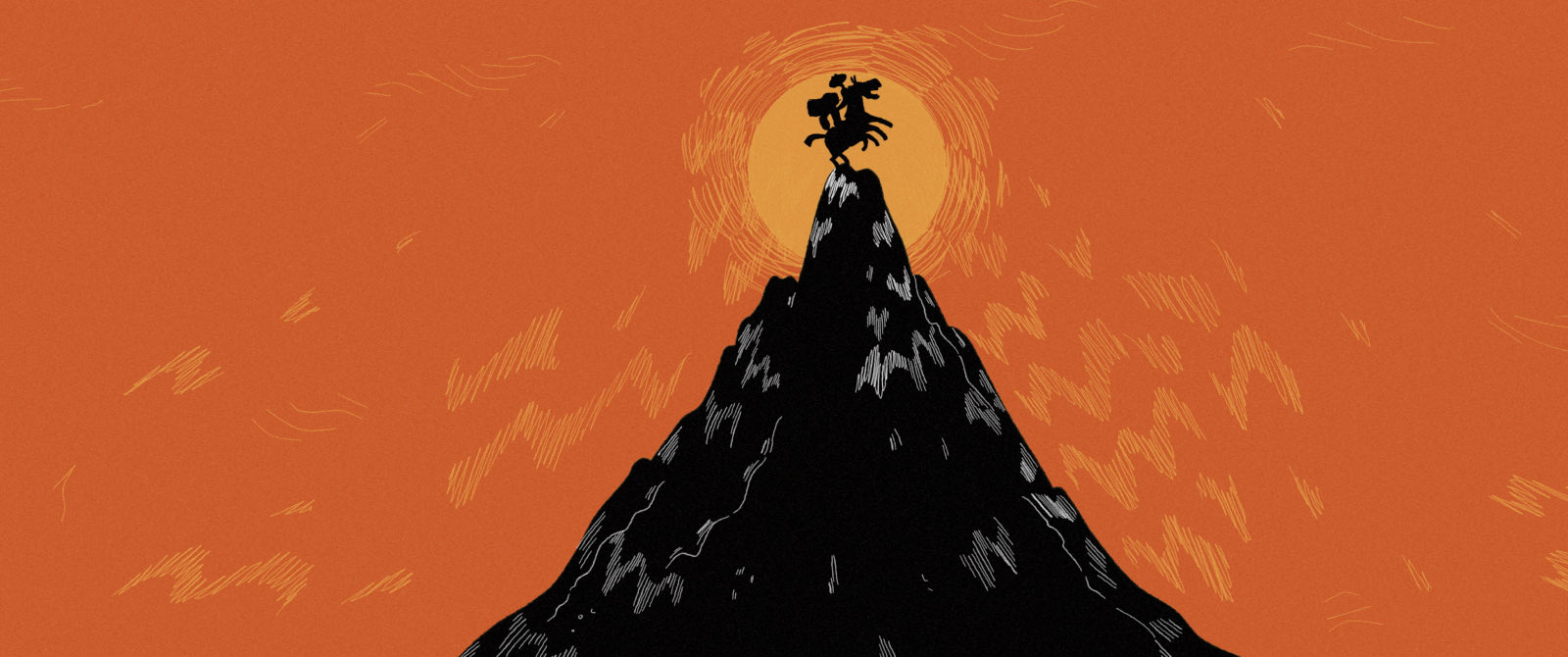
The late-night slot at 10 pm at SC Cinema is for the Brazilian, experimental-revolutionary feature Matamortes (dir. Thiago Martins de Melo) – a technically unique, red-and-black, (neo)mythological-(neo)gnostic saga about the fight against imperialist and colonial systems with the help of the heritage of folk cultures and syncretic spirituality. The film, characterised by restless textures, sumptuous ambient sounds and a nonlinear treatment of time, could also impress fans of more distinctly artistic comics.
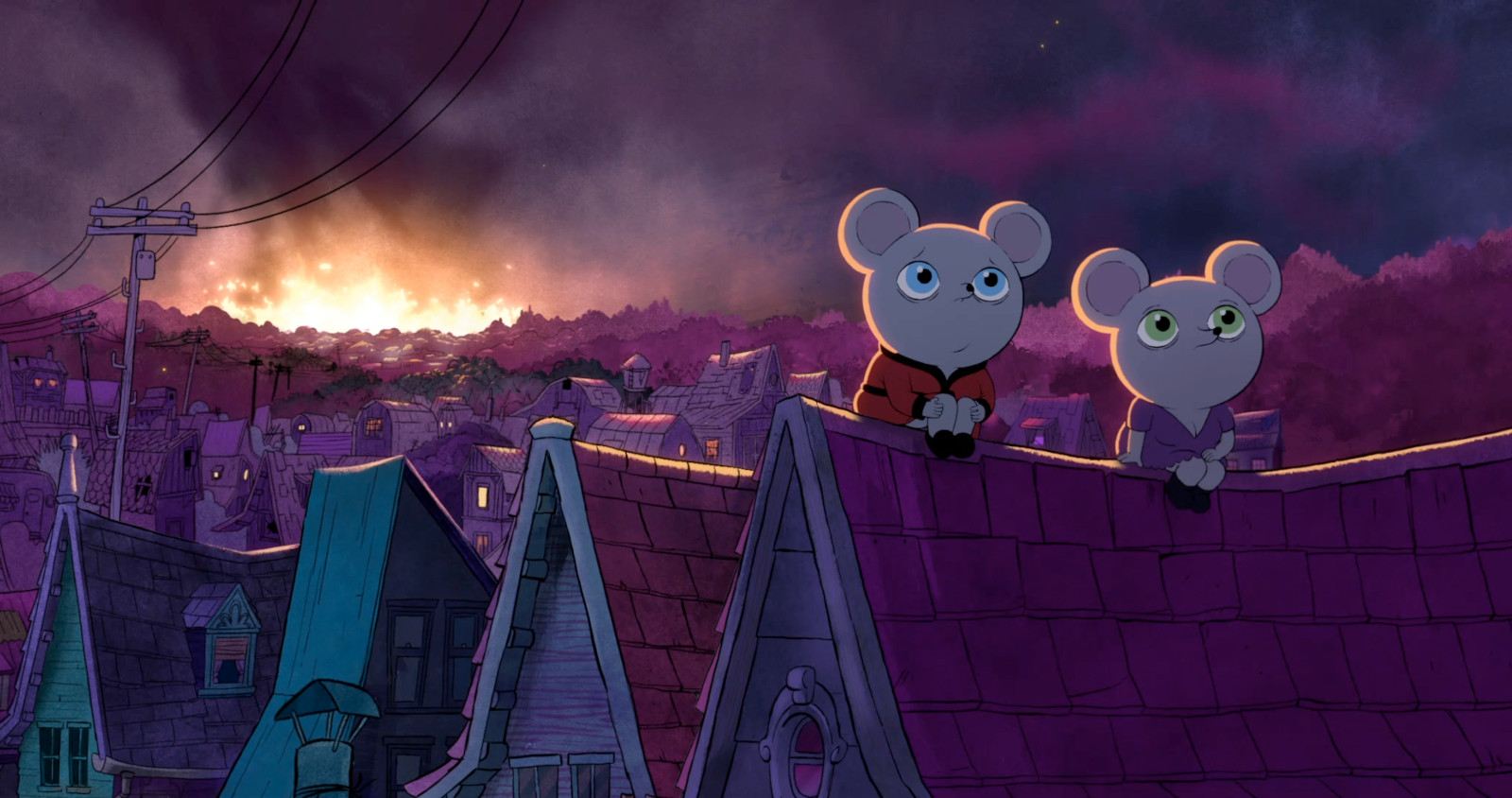
Two more titles from the Grand Competition Feature Film can be seen today at Animafest. For fans of World War II themes, but also fans of real puppet films, the Museum of Contemporary Art will be showing Dukla (dir. Gejza Dezorz) at 6 pm – a story about the coming together of a poor Roma musician and a German officer in Russian captivity and their joint escape on the edge of the eponymous battle in 1944. Criticism of totalitarian propaganda, depiction of the cruelty of both armies towards the civilian population, a shocking soundscape, as well as the distinctive use of puppets, background projections, set design, lights and archives contribute to the film's dark atmosphere. At 8 pm, also at the Museum of Contemporary Art, Decorado (dir. Alberto Vázquez) will be shown – a sumptuous, lavender-hued existentialist-absurdist black comedy about an anthropomorphic mouse who feels like he is living on a film set in a hypercapitalist dystopia. Vázquez has gained fame by combining cute round characters and the modern human condition (media obfuscation, class contempt, xenophobia and racism, drug addiction, family trauma, loneliness, unemployment, gentrification, mental illnesses...), in an ironic key of high intensity and rapid exchange of brutal jokes, but also sincere emotions, compassion and pleas for freedom. Decorado additionally places all of the above in a metafilm / metatheatrical context of life as a reality show, similar to The Truman Show.
The morning at the MM Centre is dedicated to the professional program of Animafest 2026. At 11:30 am, as part of the workshop-mentoring program for animation students AFN Edu, a lecture on the work on his film Cosmonauts will be held by Leo Černic. At 4 pm, a retrospective of the academic program RE:ANIMA, winner of the Award for the Best Animation School, will be held at the same venue – the introductory words to the 9 selected works will be given by Paulo Viveiros and Shauni De Gussem. In World Panorama 1 at 6 pm, new works by Darija Kopiec (The Pool or Death of a Goldfish), Antje Heyn (On the Mat Outside My Door), Pooya Afzali (At Night), Luisa Zürcher (I’m Not Sure), Marco Arruda (Raidinalha), Álex Rey (Poor Marciano) and Caroline Charadán and Miguel Machado (The Garden) can be seen. At 8 pm, this year’s Animafest theme programme dedicated to the connection between music and film will begin here: the fifth segment, titled ‘Experimental Music and Hypnotic Pictures, along with a conversation with Thomas Renoldner (DONT KNOW WHAT), will feature works by other authors who blur the boundaries between image and sound – Xu An and Xi Chen, Meejin Hong, Kawa Khan, Slobodan Tomić, Steven Subotnick, Jin Woo, Bärbel Neubauer, Louis Morton and Stas Santimov.
The 13th Animafest Scanner international symposium on contemporary animation will also begin today at 9:30 am in the KIC premises. The genealogies of animation (from hand-made motion to artificial intelligence) and the writing of animation histories (methods, periodisations, perspectives) will be discussed, and lectures will be given by Amid Amidi (winner of the Award for Outstanding Contribution to Animation Studies 2026 will talk about the history of American animation), Jürgen Hagler, Celine Pham, Akira Arimochi, Jenna Caravello, Paulina Martyna Ziółkowska, Olga Bobrowska, Chunning Maggie Guo, Betty Stojnić and Aurélie Petit. They are hosted by Nikica Gilić and Franziska Proksa, and the entrance is free to all interested visitors. After the end of the first day of the meeting, from 5:00 pm, the first issue of Anibar Magazine (launched with the popular Kosovo animation festival) and the book Beryl by Joanna Quinn and Les Mills will be presented at the same place. In addition to the winner of the Lifetime Achievement Award of Animafest 2026, the presenters include Marko Dješka, Meara White and Les Mills, and promotions are hosted by Nancy Denney-Phelps.
Today, the Behind the Scenes / Iza kulisa 8 exhibitions – participants of the Grand Competition Short Film (Gallery on the upper floor of KIC, 1 pm) and the Student Film Competition (Šira Gallery, 2 pm) – officially open, with numerous guest authors who will talk about their works.