Odysseys – Histories – Rebellions
Animafest Zagreb 2026 Grand Competition Feature Film

Samurai Ballerina - L’étoile de Paris en fleur (Goro Taniguchi)
Among eight lavish, humorous, suspenseful and reflexive pieces gathered in the Grand Competition Feature Film of Animafest 2026, at least a half belongs to the cut-and-dry ‘audience favourites’ category, while the others will undoubtedly please long-time fans of artistic animation.
The list of must-see attractions opens with Samurai Ballerina – L’etoile de Paris en Fleur, the latest film by Gorō Taniguchi, the director of the hit One Piece: Red (2022), who is arriving in Zagreb in person to present this story of the Parisian belle époque and the Japanese Meiji period. The plot that begins in Yokohama in 1907 with a visit from a European ballet company, continues in 1912, when girls Fujiko and Chizuru move to the French capital, with the former hoping to become a Western-style painter and the latter, a master of the traditional naginata martial art, a ballet dancer. Both ambitions collide with the family plans, which see them primarily as future wives. Samurai Ballerina is a tale of conflict and interconnection between tradition and modernity, coming-of-age and persistent fight for one’s own dreams despite ‘hard’ reality, emigration and belonging, agency and success in a foreign world, overcoming boundaries and love for art, as well as finding one’s own voice in the vertigo years of European history. At the same time, the film also raises questions about orientalism and occidentalism – the colonial or simply non-critical view of the Other which marked the Western and Japanese fascinations, stereotypes, delusions and superficial imitations. For example, Russian and Japanese immigrants, whose countries were at war until recently, now take part in a cultural exchange, while prejudices against Chizuru correspond to today’s moment in ballet art where Asian dancers, after being long exposed to such bias, now achieve the greatest possible success. Finally, although Parisian vistas have probably never been painted so lovely (the backgrounds are a particular treasure of this film), their unique anime portrayal is in fact halfway between reality and idealization. The film also captures with the depiction of ballet itself, designed with the help of motion capture footage of professional dancers, as well as re-enacted western-style paintings, detached from the traditional anime manner. With a characteristic dramatic expression, recognisable network of actants and humour, cute animals, fairies, classical music and, of course, attractive portrayals of food, Samurai Ballerina itself, as a somewhat innovated and modernised, and somewhat traditional anime, reflects the subject it addresses. The screenplay for the film premiering internationally at Animafest was written by Reiko Yoshida (who made a name for herself with Silent Voice, Ride Your Wave and The Colors Within) while character design was executed by Yu Yamashita (Kiki’s Delivery Service).
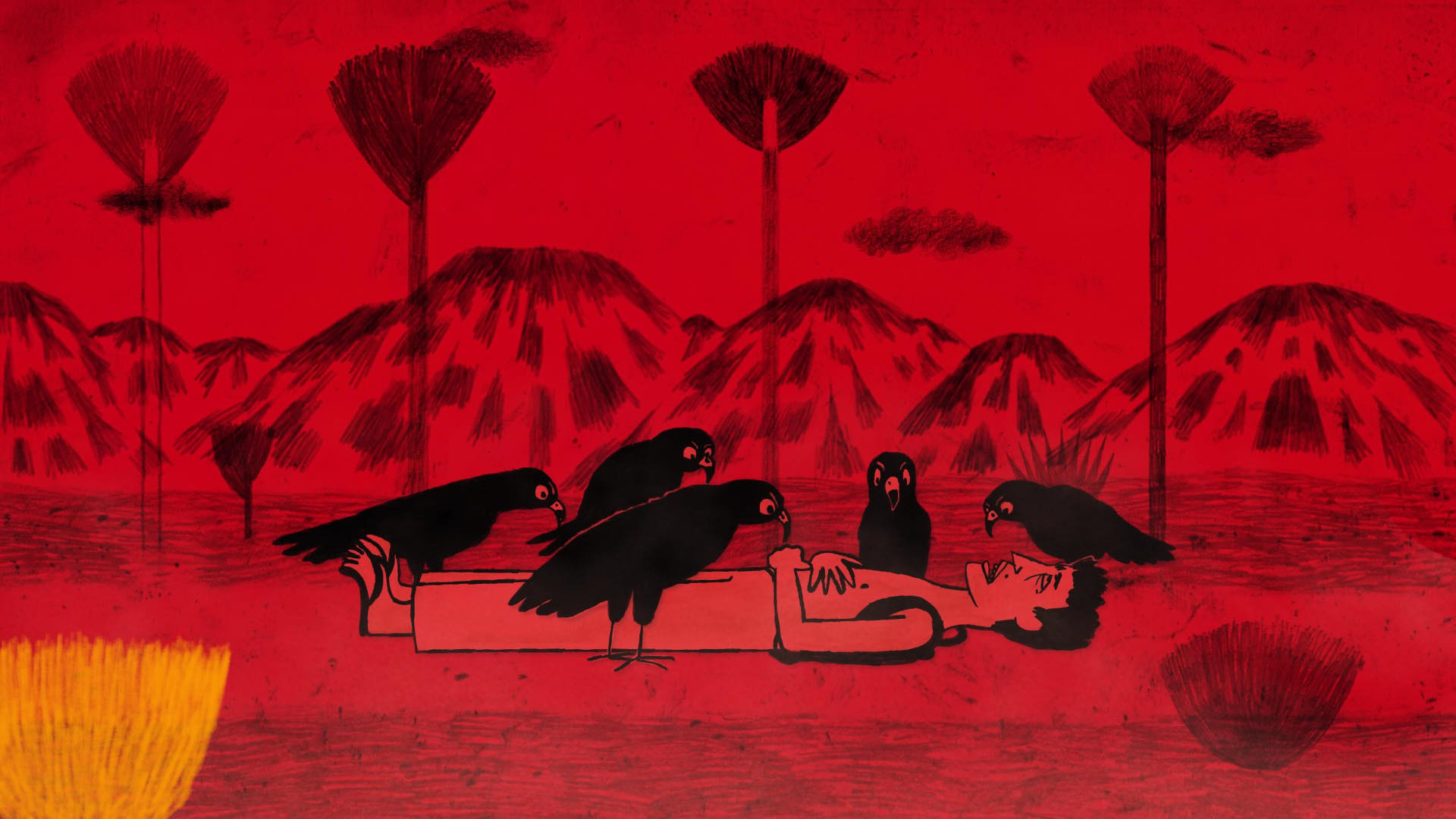
The world premiere is, on the other hand, reserved for the hilarious Brazilian comedy drama Son of a Bitch, among whose creative team (Erica Maradona, Otto Guerra, Sávio Leite, Tania Anaya) a sharp eye will recognise another big name – that of Otto Guerra, the legendary South American comic artist and animator, pioneer of the local independent scene. The protagonist of Son of a Bitch, Ishmael, is a versatile handyman, a virgin and the son of a prostitute Maria Tereza, who runs a brothel in the small town of Veredas. Ishmael runs away from home to find his father, and while crossing the desert road towards the sea in a western / road movie adventure, he is accompanied by a three-legged dog with whom he meets an array of different characters. Direct and gritty in line with the harshness of the setting it depicts, dynamically framed, in a mostly black-and-white drawing (with the use of yellow, red, blue, brown and pink as filters), Son of a Bitch is humorous thanks primarily to the talking canine companion and its likeable, cynical-stoic character, but also to the ironic exchanges of the human characters. It is also, however, a film of self-discovery and coming-of-age – a modern reading of Melville’s novel as a search for roots and identity, i.e. for the courage to set out on one’s own path from a stifling homeland, but to return to it one day, with a refined spirit. In Croatia's Mediterranean context, Son of a Bitch will also be recognisable as a "small-town film", imbued with ingeniously cruel stereotypes, nicknames and other provocations, as well as folk piety in conflict with folk profaneness – a context in which any thought of sublime romance must fail, but which nevertheless advocates communal living. With a touch of magical realism and biblical allegories, two musical numbers and at least one truly suspenseful scene, Son of a Bitch is a spirited personal odyssey.
Another, Dandelion’s Odyssey (dir. Momoko Seto) is a botanical-cosmic, poetic hyperrealistic journey made with 3D animation, documentary footage and time-lapse photography. The feature-length debut of a director of ecological TV and science films, it is a post-apocalyptic travelogue from a distant planet inspired by our own – more than an appealing natural science-adventure work of successful character design and convincing characterisation of personified dandelion seeds, the film is also an imaginative SF created with an unusual perspective on the familiar. In addition to exciting experiences in different habitats and attractive, often ‘photorealistic’ visuals that make it exclusively a movie theatre piece, Dandelion’s Odyssey also narrates with the soundscape of Nicolas Becker – from the melancholic percussion of an Indonesian band, to electronic sounds, free jazz, orchestral music and waltz, but also the ‘windy-whistling-murmuring’ vocalisation of dandelion seeds. Despite the monolithic setting, the film is easy to watch, just like the title plant, so Odyssey ‘naturally’ imposes itself as a family experience for all ages, immersible through the big screen. Following up on the trend whose most visible expression is of course the Oscar-winning Flow, Dandelion’s Odyssey depicts the beauty of a world without humans through the journey of unexpected heroes as an environmental parable, relying on the appeal of both the flora and fauna that is breath-taking in size, detail and complexity. In this sense, critics have also compared Dandelion’s Odyssey to Minuscule: Valley of the Lost Ants, and honoured it with its FIPRESCI award at the Cannes Film Festival.
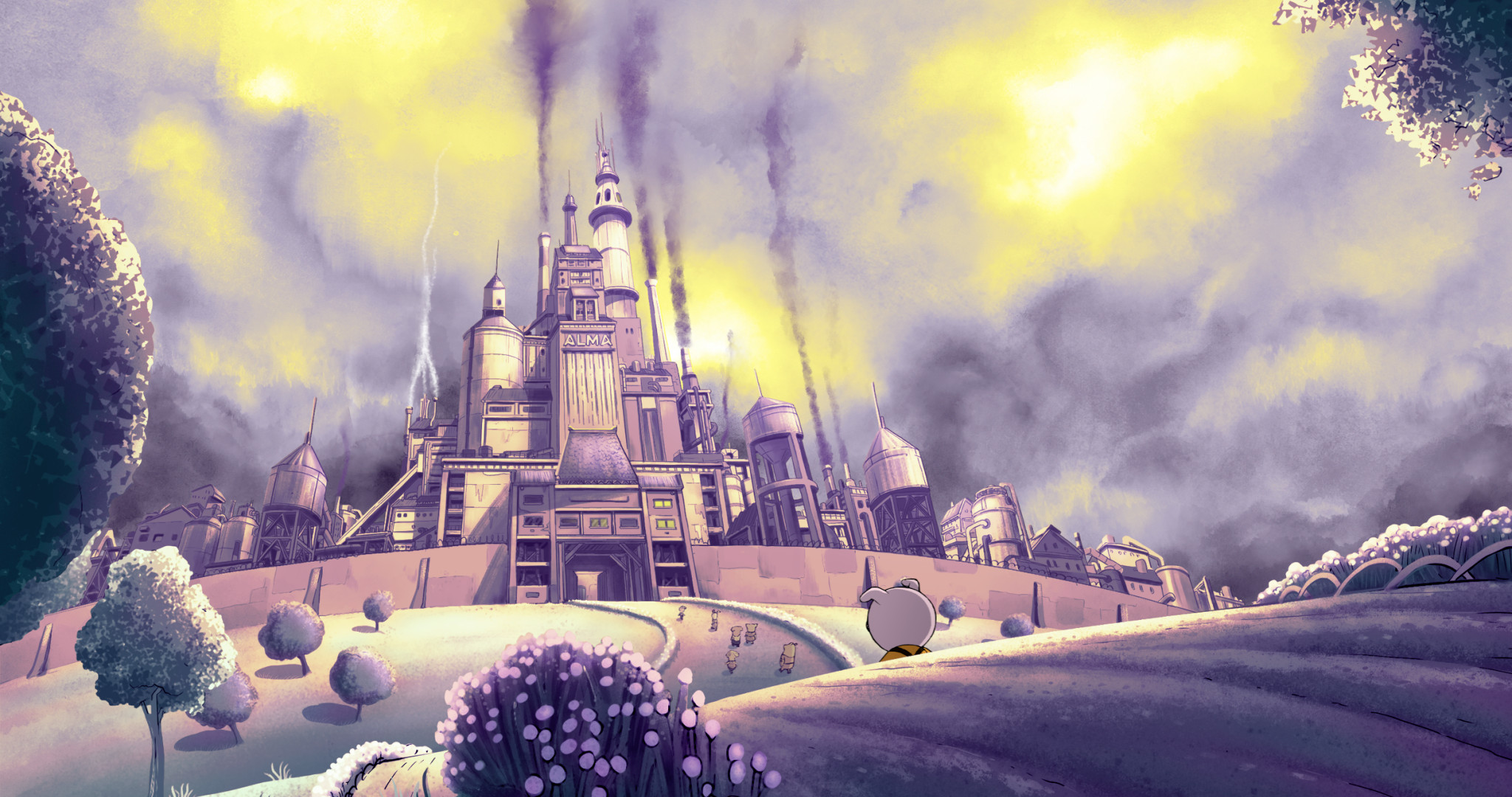
The Spanish filmmaker Alberto Vázquez, a globally-renowned comic book author, animator and a three-time winner of the Goya Award, can be considered a modern Animafest classic because he has already screened two feature and three short films in Zagreb. It should come as no surprise, then, that the festival’s loyal audience will feel a certain déjà-vu when they encounter the title Decorado in this year’s feature competition. Not only did Vázquez’s black-and-white film of the same name compete in the short competition in 2017, but in its new feature-length, lavender-tinged version, it does not deviate from its recognisable design of anthropomorphic animal characters, nor from other characteristics of Vázquez's poetics: existential-absurdist black comedy or ‘late capitalism fairy tale’ with impoverished and oppressed characters under the repression and exploitation of Orwellian regimes or, in this case, omnipresent and all-powerful corporation. It is a story of an unemployed and paranoid middle-aged mouse who begins to feel like he lives on a film set (i.e. decorado) and, having lost his best friends, decides to escape from the world in which everything is controlled by the Alma company. His wife, a cartoonist experiencing a creative crisis under the influence of the Depression Fairy, is worried about the impending eviction and is considering divorce. Vázquez gained fame with the fundamental process of matching the cute, big-eyed, round characters and their disturbing actions, i.e. a Disney-Miyazaki idyllic setting and a macabre life, in an ironic key of high intensity and quick exchange of brutal jokes, but also sincere emotions, compassion and pleas for freedom. This innovation is here finally accompanied by an explicit aphorism: ‘the world is a wonderful stage, but it has a deplorable cast’. With the feature-length Decorado the procedure is additionally placed in the metacinematic / metatheatrical context of life as a reality show or performance, similar to Truman Show, to which it pays an explicit homage (in addition to Scenes from a Marriage, Buñuel, Donald Duck, Mickey Mouse and Fritz the Cat), although the roots of such stories are much older, and Calderón's Life is a Dream coincidentally originates from the same country as Decorado (co-produced, admittedly, with Portugal). The film, partly based on parallel stories and flashbacks and generously orchestrated, is less violent than the previous Unicorn Wars, and more subtle in its depiction of the contemporary human condition (media obtuseness, class contempt, xenophobia and racism, drug and medication addiction, family trauma, loneliness, unemployment, gentrification, mental illness and loss of touch with reality), but it still occasionally uses splatter scenes. In the words of the author himself, Decorado is a film about crises of health, work and social exclusion that lead to a crisis of identity. Freedom should therefore be sought in love and friendship, or rather in ourselves.
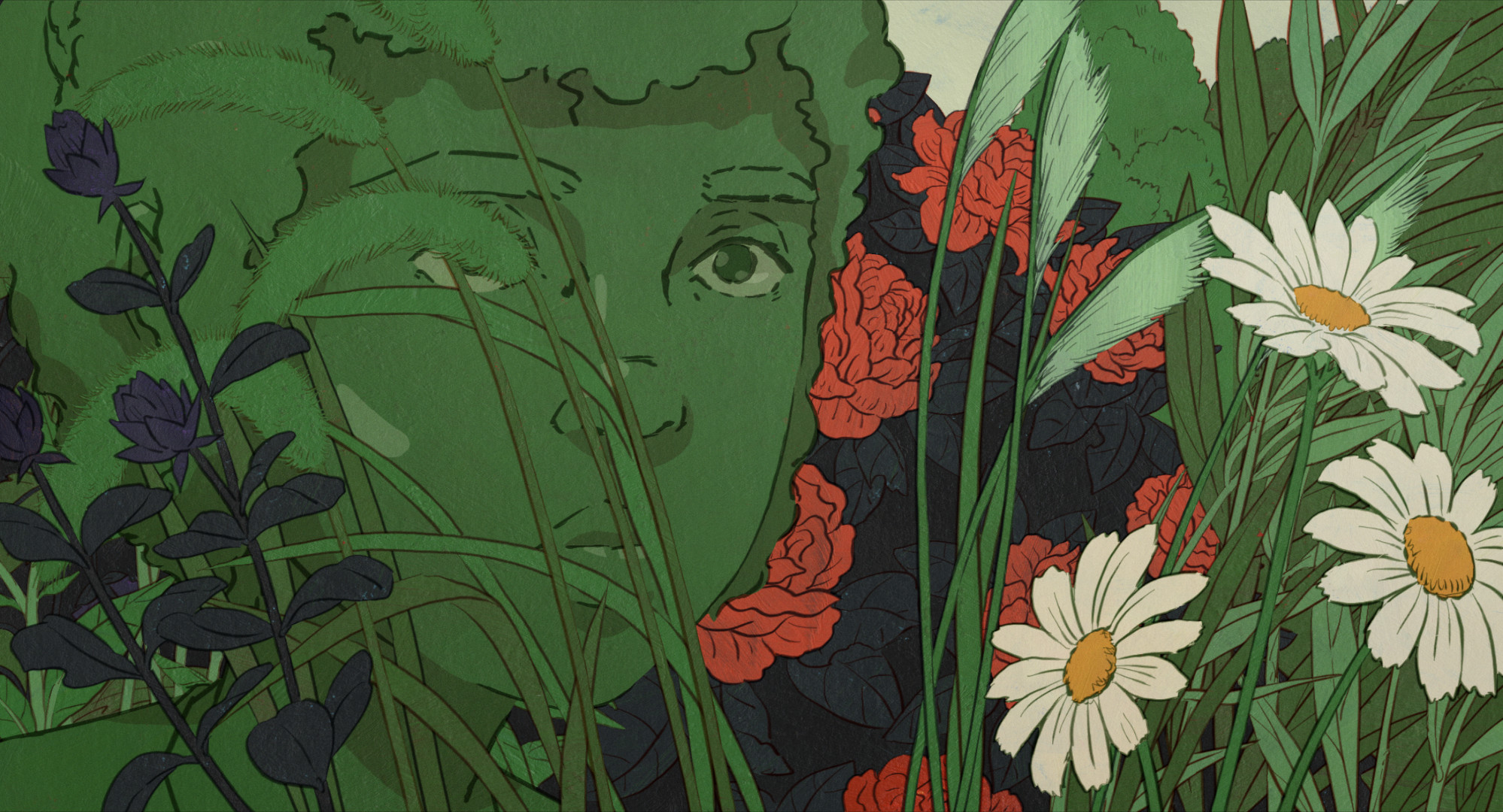
The third participation of Quebec artist Félix Dufour-Laperrière in the Grand Competition Feature Film will surprise the fans of his previous documentary-ethnographic, essayistic and engaged films marked by the blackness of ink, because Death Does Not Exist is a colourful 2D film with realistic physiognomies and merging of characters with backgrounds (the environments in which they are found), which are themselves executed in surprising tones (e.g. red-and-white forest; gilding). In addition, the dynamic change of perspectives (what we would call camera work in a live action film), as well as associations with more ambitious graphic novels, further underline the visual virtuosity. The plot, which follows the self-examination of the revolutionary Hélène after the tragic action, is somewhat stronger than those from the previous films, although still on the border between reality and imagination – dreamlike-hypnotic, philosophical, charged with layered symbolism and organic animated metamorphoses (of wolves and sheep, birds, flowers, dead friends, blood or the heroine who meets a younger version of herself). In fact, the plot can be understood as a psychological-political allegory, an extended dream sequence that is also a (French New Wave-style) essay – a reflection on individualism and collectivism, the personal value of activism and, more generally, on the dynamism and anger of youth versus the stoicism of old age, life’s turning points and choices, fear, courage and contradictions in finding one’s own path between personal interests and different types of loyalties. ‘Between an eco-thriller and Ghibli-style surrealism’ (Redmond Bacon), Death Does Not Exist is certainly one of the most visually striking films to be seen at this year’s Animafest.
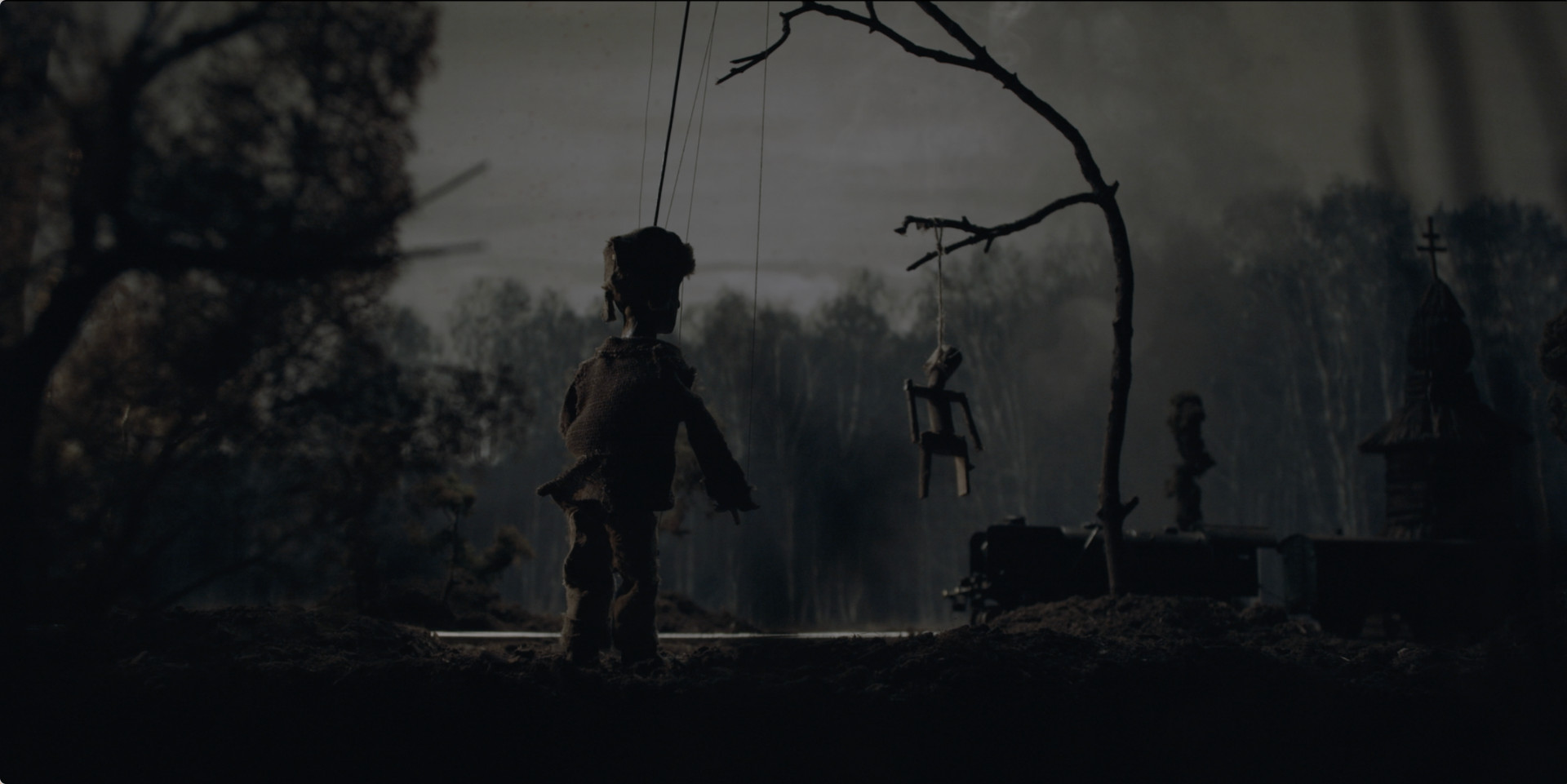
Fans of World War II setting will appreciate the Slovak hybrid of live action and puppet film Dukla by Gejza Dezorz, whose plot is set during the Soviet-German battle for the eponymous pass between Poland and Slovakia in 1944. The rapprochement and falling in love of a Roma musician and a German officer in Russian captivity and joint escape is framed by a critique of totalitarian propaganda and a depiction of the cruelty of both armies towards the civilian population. The distinctive use of puppets, background projections and archives, as well as the camera (which often uses handheld, dominantly close-up shots to dynamize the plot of mostly static models), the overall sound image, set and lighting design, contribute to the film’s dark atmosphere. This is also due to the grotesque impression created by the treatment of this theme through grey-brown marionettes soldier and minimalist wooden peasants, the caricatured characterisation of Russian soldiers and the strikingly human synchronisation of animals, i.e. the preservation of the overall hyperbolic aesthetics of puppet theatre. The scene of the union of the two men is in complete contrast to the rest of the film – poetic and gentle, with naked puppets moved by human hands. In its direct depiction of the brutality of war and the character of officer Kurt, given a chance for self-awareness in the midst of the collapse of humanity, the film is thus, in an unusual, stylistically significantly divergent way, complementary to Jonathan Littell’s bestseller The Kindly Ones. Dukla is the first Slovak feature-length puppet film, about which director Dezorz says: ‘The gap between love and hate opens up completely in times of war and only common sense and human emotions freed from the layers of civilisational and social prejudices can bridge it. The heroes of my film are not only on opposite sides of the barricades, but also on different levels of the social ladder. Their gradual rapprochement and internal transformation lead to tragedy. Today, when we witness massacres that glorify criminal regimes and incite violence in the name of distorted ideas, the cruel war experience of 80 years ago resurfaces to remind us where the boundaries of love and hate, human existence and morality lie.’
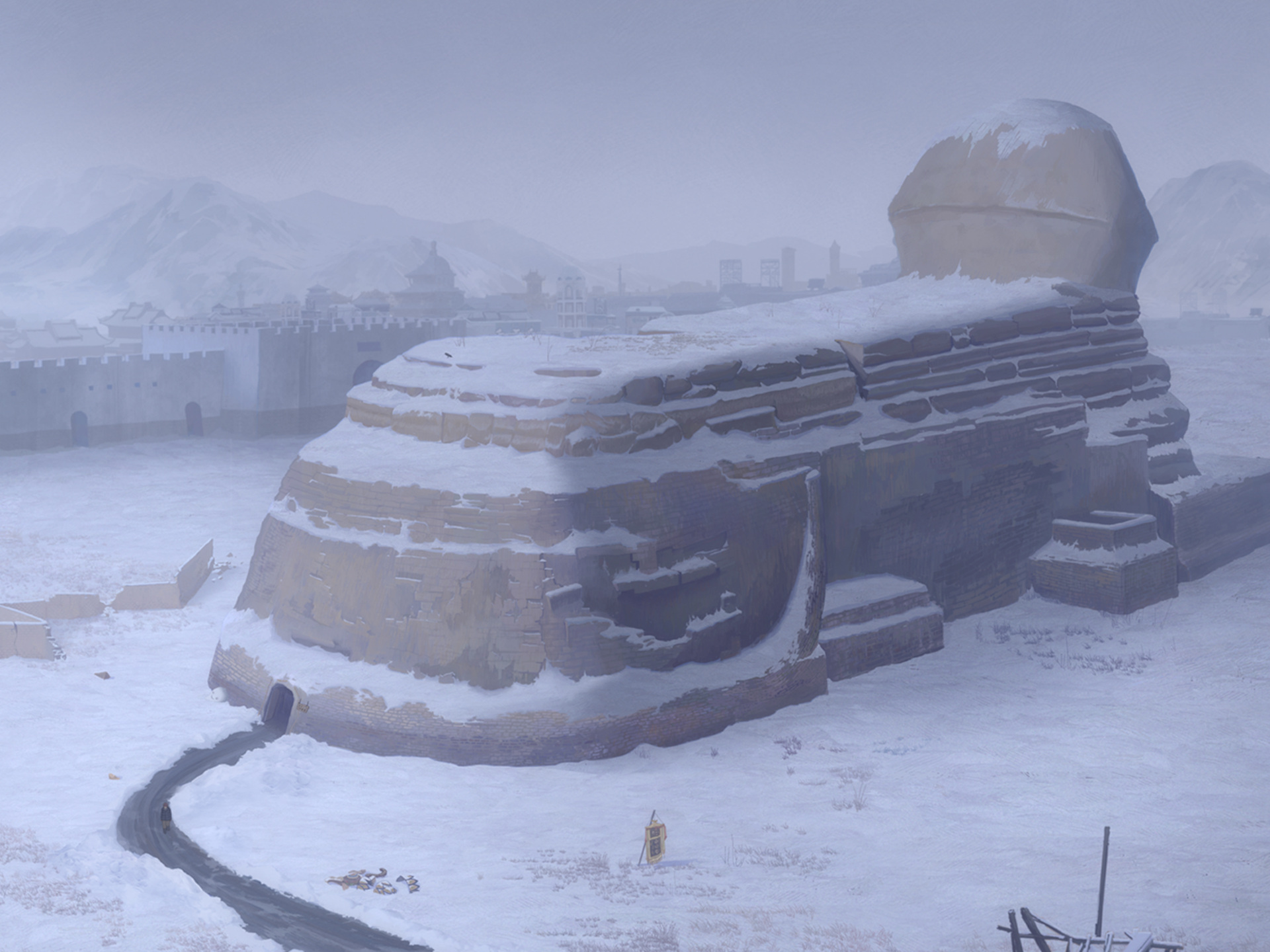
The Chinese science fiction (meta-)film Light Pillar is also technically hybrid, but the combination of 2D and 3D animation, live-action segments and claymation gives it a more classically attractive appearance. An interesting inversion is the use of animation to depict film reality, and live-action segments of video aesthetics to evoke a virtual amusement park. The story of a lonely janitor of a film studio in decay, who finds solace in a disneyfied virtual reality and, fooled by a classic romantic scam, collects money for a trip to outer space, is marked by a pronounced contrast between the tired everyday life of the ‘socialist market economy’ and imagination, as well as melancholy and wit. After the film’s screening at the Berlinale, critics noted that the film studio, interwoven with references to the history of Chinese cinema, represents the gradual decay of shared cultural memory, while the winter atmosphere stands for emotional numbness of an extremely withdrawn everyman. The film is, they concluded, a meditation on the virtual world as a solace, but without previously drawn conclusions. Vassilis Kroustallis, on the other hand, calls Light Pillar a ‘visual elegy of lost illusions’ in which the making of the film represents a parable about ‘larger than life’ aspirations that never come true. Much more than about the pitfalls of the virtual environment, this work is about the ‘disappearance of reality from reality’, i.e. about capitalism that artificial intelligence, VR, scams, microtransactions and other new-age horrors simply amplify. Filmmaker Xu Zao has under the name Jingwei Xu already competed at Animafest 2023 with the warmly received No Changes Have Taken in Our Life – similarly as Light Pillar particularly strong in the depiction of the exhausted-alienated, derivative life of the slow-walking, slow-speaking characters. The framing and mise-en-scène, in which the characters are often shown in half-length shots, in profile or in unnaturally pronounced portraits that together point out to their insignificance, are also repeated. With a somewhat muted colour palette and a moderate rhythm, the film thus supports its content with a form that has also been compared to Sylvain Chomet.
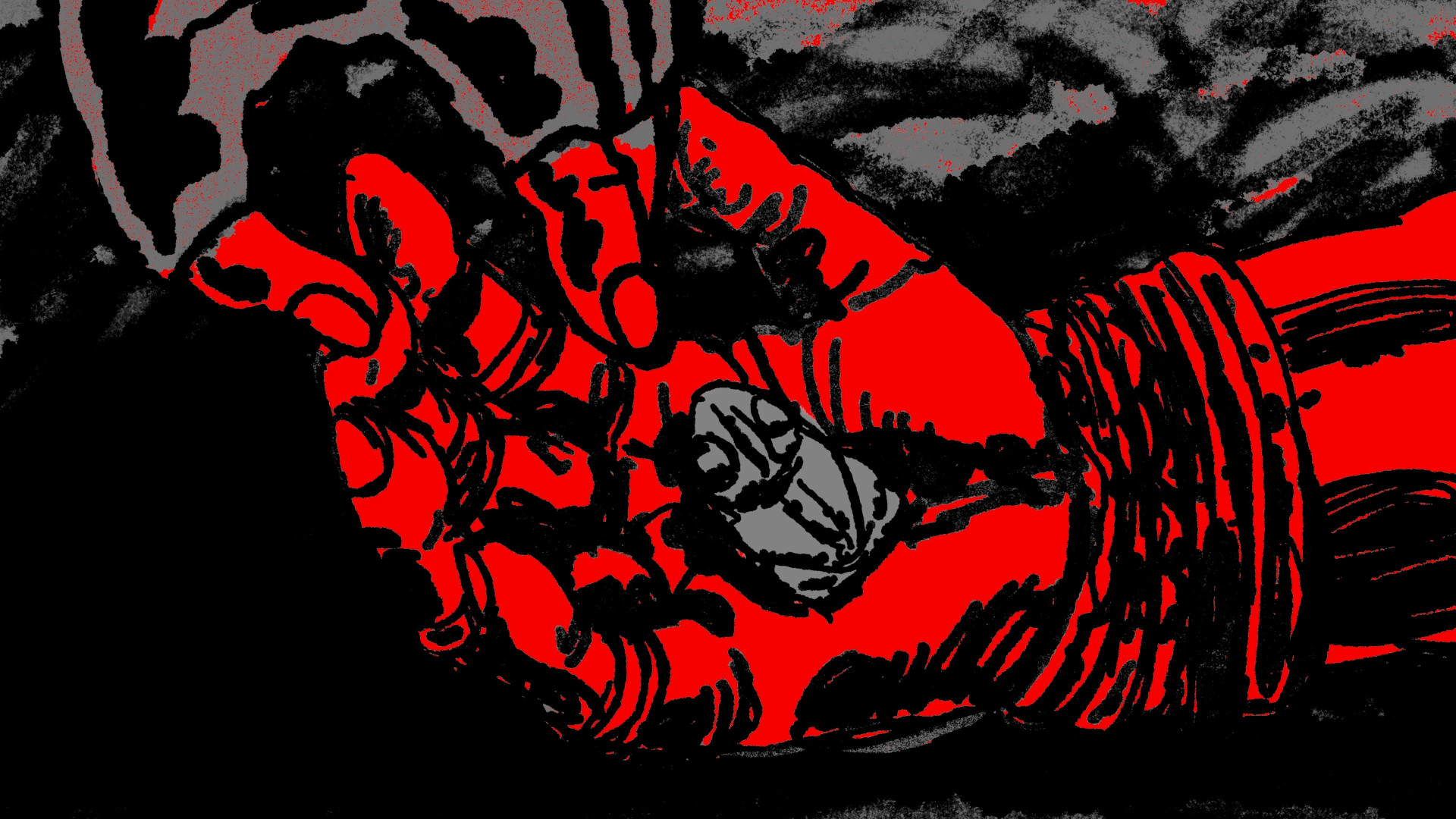
For the consideration of experimental film afficionados, The Brazilian Matamortes by Thiago Martins de Melo will also be screened for the first time on European ground. A technically unique, red-and-black (neo)mythological-(neo)gnostic saga is described by the author as ‘an ode to the alliance between the spiritual left path and the revolutionary left’. Equipped with defamiliarized symbolism and text that is anything but straightforward, the astral-esoteric Matamortes first stages the birth of a new god shaped from African and South American beliefs and a heroine who then dedicates herself to the fight against the colonial system. The narrative with the rider seems to be an advocacy of a return to the primal in the treatment of nature and relationships, the elevation of indigenous culture and the redemption of the concept of tribalism. In later segments, marked by urban settings and scenes of the repression of protests, the strong anti-imperialist ethos is underlined by intense scenes of violence by the ideological apparatus of the state against the ‘wretched of the Earth’. The film characterised by ‘metamorphoses of the landscape of capitalism’ and equipped with restless textures resembling frescos, luxurious ambient sounds and a nonlinear treatment of time in which the past and the present coexist, could also impress admirers of more distinctly artistic comics. Martins de Melo is a visual, multimedia artist whose work combines dense compositions and materiality of paintings with post-colonial, historical and mythological themes and the study of syncretic spirituality and epiphany. His paintings are monumental, intense and polyphonic, and he also directed the short films Bárbara Balaclava and Rasga Mortalha, both praised for their unique visuality and symbolic intensity. His film role models include Rocha, Jodorowsky, Lynch and Herzog, and he describes his view of artistic creation in the following words: ‘The South American artist has no time for fear and cannot afford mere formal research alienated from the socio-historical context. Art and blood are not in vain because art in the Global South has a much greater significance than in other geopolitical contexts. Here it is part of resistance.’